Celebrating culture, community and curiosity: a Methodist perspective
Continuing our series on “celebrating culture, community and curiosity”, David Musgrave offers a Methodist perspective on Bath Mayor Cllr Ruth Malloy’s theme for 2026/2027.
Methodism was famously “Born in song”. Charles Wesley, one of the greatest hymn writers in the English language, was alongside his brother John in the mid-18th century in laying the foundations for what became the Methodist church.
This was all about being in the midst of the community, consenting to be ‘vile’ in the language of the time, taking a new message of hope and self-worth to farm workers in the field and miners at the pithead, rather than waiting for them to come through the forbidding doors of the church.
The tunes the hymns were sung to were catchy and often based on existing popular songs. Listen to the recording by Maddy Prior and the Carnival Band and you get a sense of how hymns would be heard at the time, full of life and joy compared to the slow sometimes stodgy chanting of the established church of the time. (The contrast hasn’t entirely disappeared!)
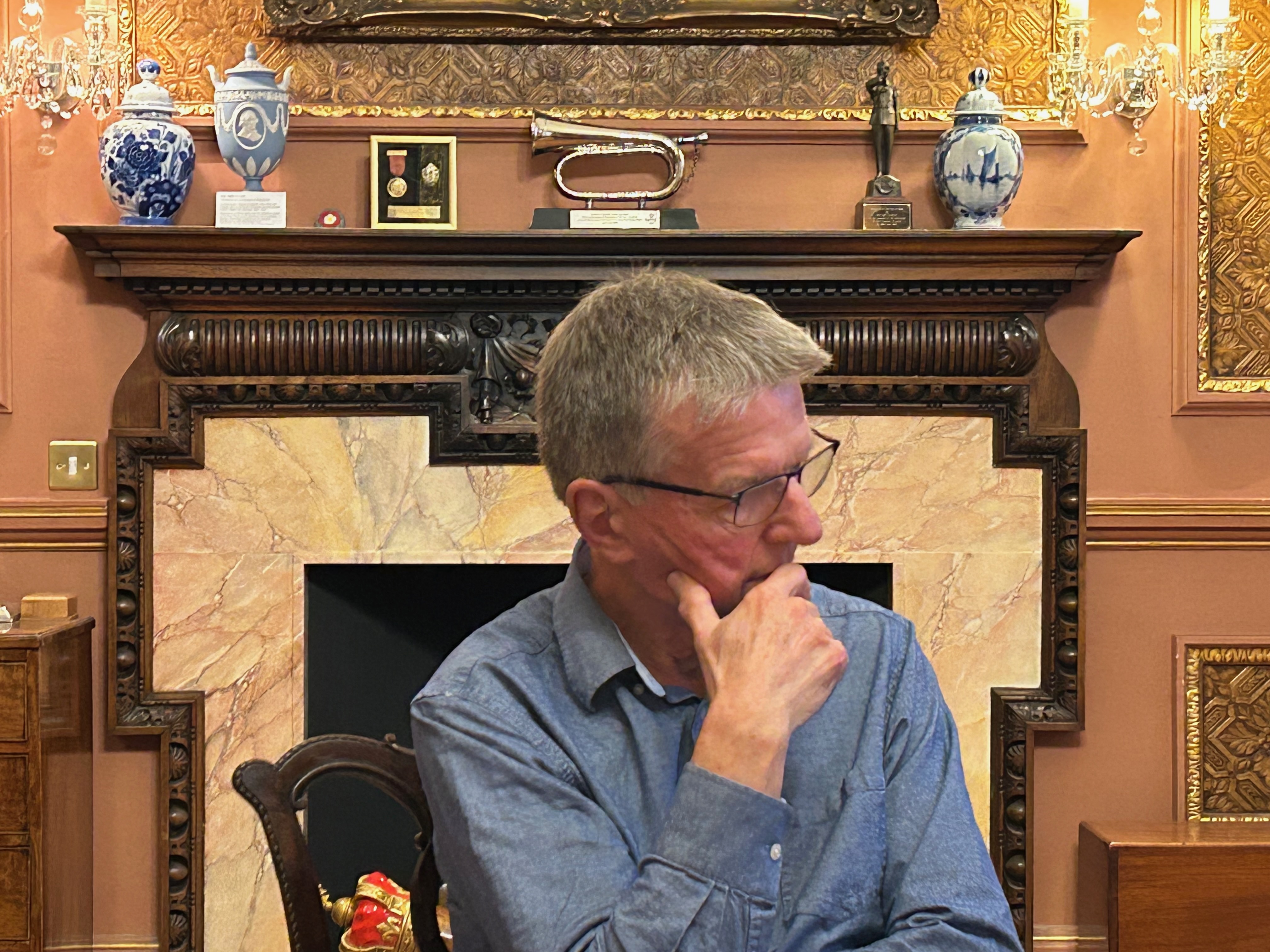
Bath IFG Secretary David Musgrave, former diplomat and a retired Methodist Minister, in the Bath Mayor’s Parlour
Methodism was also always about reaching outwards rather than relying on a private understanding of faith. We were to meet together not (just) to feel good and refresh ourselves but to support and indeed challenge one another to make the world a better place. Church was not a refuge from the world but a springboard into the world. So early Methodists saw it as part of their faith to work for prison reform, workers’ rights, an end to the slave trade. In more recent times Methodists have been active in campaigns to end world poverty and to work for peace and justice at every level.
Methodist theology has also encouraged a sense of curiosity, about the world and about ourselves. It tends to be liberal, in an understanding that God has given us a mind to use and therefore dogmas are not to be accepted without question. It tends to be inclusive, because we hold fast to the belief that we are all created “in the image of God” and that the Love at the centre of the universe is ultimately able to overcome all that divides us.
Inter faith engagement is a natural part of this.