Difficult conversations; learning more at Ammerdown
Continuing our series on how to become more skillful with difficult conversations and get the best out of conflict.
In a vibrant multi-cultural or multi faith environment conflict is an inevitable sign of diversity. We can’t avoid it. We need to make the best of it.
Conflict means difficult conversations we need to have, but all too often we’re not doing very well. Climate change might be the most existential. Israel/Palestine is perhaps the hardest. In our community we also need to talk about death, poverty and inequality, racism and all the othering “isms”. But we seem unable just to have a civil conversation about something as unobjectionable as low traffic neighbourhoods.
Bath IFG decided we need to get better at having difficult conversations.
We started having small home conversations about topics like the dark side of faith, faith and politics, or faith and sexuality.
We organised our own open session which was simply about having good conversations.
Bath IFG is a member of the international organistion United Religions Initiative (URI). It organises some excellent “difficult conversations” training. This is greatly brought to life with imaginative online techniques and the international participation of people from “hot” conflict zones. URI has a whole programme on Peacebuilding and Conflict Transformation.
Meanwhile Bath IFG developed its own programme delivered as an online course by Leon Dundas. Leon’s unique experience and approach meant this was very highly rated by all participants.
Most recently some of attended a workshop Living Well with Conflict: Dealing with Challenging Conversations workshop. This was delivered by Carolyn Merry, director of our excellent local multi faith centre Ammerdown.
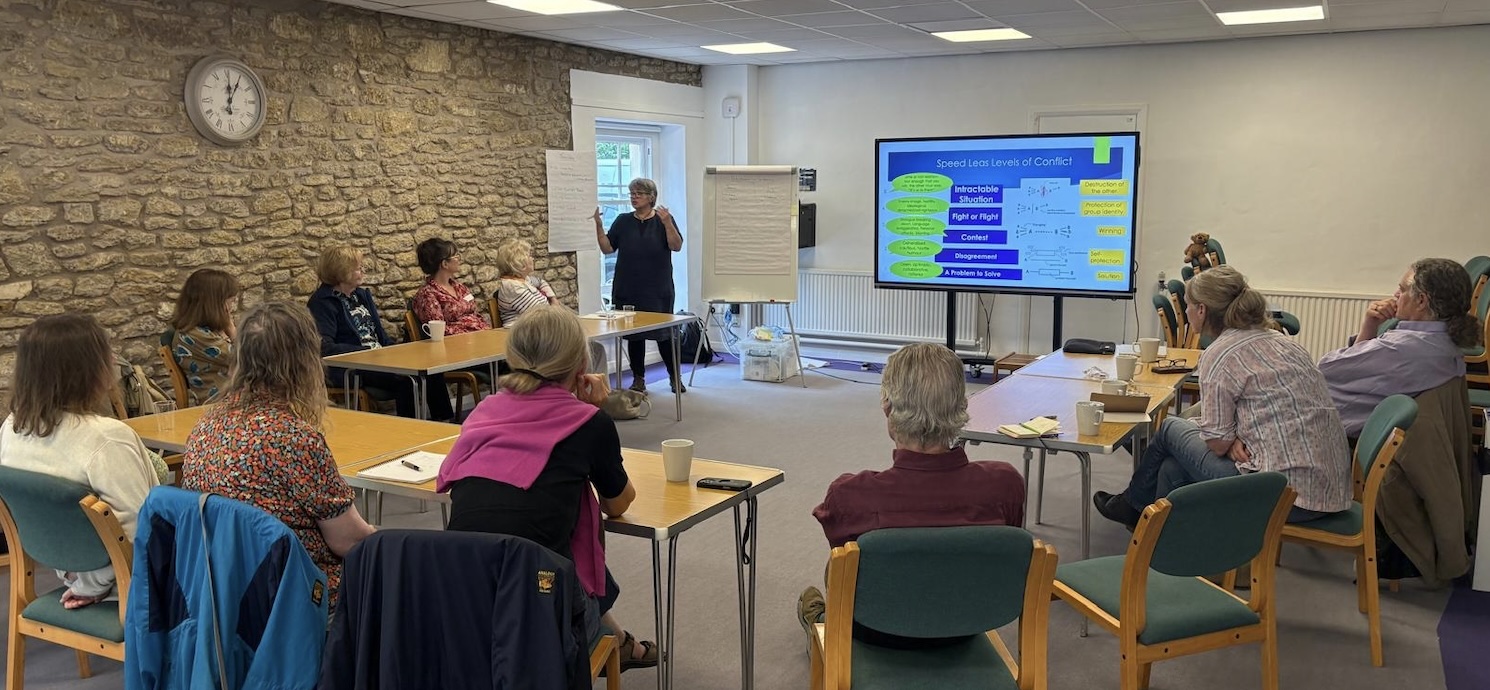
Ammerdown director Carolyn Merry delivers conflict and conversation training.
This session was confidently set in a broader formal academic context. Most delegates initially thought of conflict as something to try to manage. But it’s better if it’s resolved, and best of all if we can successfully use it as a means of effective transformation and growth.
Carolyn shared the academic Speed Leas’ “levels of conflict” model. According to this, as conflict escalates from a simple problem through disagreement and contest to an intractable situation it loses trust and escalates pain at each stage. Tellingly, each stage has a different goal and requires different language. With exercises for active listening, reframing and de-escalation techniques this was a powerful teaching, tested on Carolyn’s long experience in conflict situations.
In conclusion: there are plenty of ways to learn more about how to use conflict skillfully as a way for growth and deeper understanding. We need to continue to learn them and to be able to share these lessons.
Ammerdown continues to run its Living Well with Conflict series. Next one *Dealing with Challenging Behaviours in Conflict* is Th 5 Nov.